

Why Small Businesses Still Need a Ransomware Plan
Can a small business really be hit by ransomware?
Yes. A business does not need to be famous to be affected. Ransomware can arrive through a compromised account, a malicious attachment or link, an exposed service, or an unpatched system. The useful question is not whether a business is “too small to hack.” It is whether the business can prevent, contain, and recover from an interruption.
The CISA StopRansomware Guide recommends treating ransomware as a business-continuity problem as well as a security problem. That means planning before an incident, not trying to invent a response while files are unavailable.
What ransomware can interrupt
Ransomware can affect more than a folder of documents. Depending on the systems involved, an incident may interrupt:
- Shared files and customer records
- Email and calendars
- Billing, payroll, or scheduling
- Production or job information
- Customer communication and online services
The impact depends on which accounts and systems are compromised, how widely the event spreads, and whether clean recovery options are available. That is why a short list of critical systems is more useful than a vague promise to “back everything up.”
The five controls that reduce the damage
No single control solves ransomware risk. A layered approach gives the business more than one opportunity to prevent or limit an incident.
- Use MFA on important accounts. Protect email, administrator accounts, remote access, financial tools, and other services that can open a path to business data. The FTC’s small-business cybersecurity guidance includes strong authentication as a core practice.
- Keep software and devices updated. Assign an owner for updates and replace or isolate systems that can no longer receive security fixes.
- Limit access. Give each person and service only the permissions needed for the job. Review administrator access and remove accounts that are no longer active.
- Maintain tested backups. Keep recovery copies protected from the same credentials and systems used for daily work. Test that important files and systems can actually be restored.
- Build phishing-resistant habits. Teach people to pause on urgent requests, verify payment or password changes through a known channel, and report suspicious messages. CISA’s phishing guidance is a useful reference for team discussions.
For the wider checklist around these controls, read small business cybersecurity guidance for 2026. For the recovery side, use our small-business data backup guide.
What to do during a suspected attack
Use the written response plan and keep the first actions focused:
- Disconnect an affected device from networks when it is safe to do so. Do not destroy evidence or start deleting files in a panic.
- Contact the person responsible for technology or your incident-response provider.
- Record what happened, when it started, which devices or accounts are affected, and what messages appeared.
- Secure suspected compromised accounts and preserve relevant logs with qualified help.
- Follow the business’s legal, insurance, customer-notification, and law-enforcement procedures.
Do not make a rushed payment decision inside a blog checklist. A qualified responder, legal adviser, insurer, or law-enforcement contact can help the business understand its options and obligations.
Why backups must be tested
Seeing a recent backup file is not the same as proving recovery. A restore test can reveal missing permissions, disconnected applications, incomplete data, or a recovery process that only one person understands.
Test a realistic file or system, record how long the process takes, and update the plan when something fails. Consider which copies should be offline or isolated, who can access them, and how credentials would be recovered if the main identity system were unavailable. CISA’s ransomware guidance provides a broader planning reference.
How this fits into a broader security plan
Ransomware planning belongs with account protection, device maintenance, phishing awareness, and business continuity. Start with the cybersecurity checklist, then review how to spot a phishing email and strong passwords, passphrases, and passkeys.
A sensible next step
List the five systems your business would struggle to operate without. Then write down who owns access, updates, backups, and recovery for each one. If that list is difficult to make, schedule a general consultation to map the starting point.
Need a technology partner in the Yadkin Valley?
Corespark helps local small businesses in NC and VA with tech strategy, web development, and more.
Talk to Corespark →More from the Corespark Blog

PHP2Shell: What WordPress Site Owners Need to Know
PHP2Shell affects WordPress sites with unpatched PHP. Learn how Northwest NC and Southwest VA owners can check the PHP v...
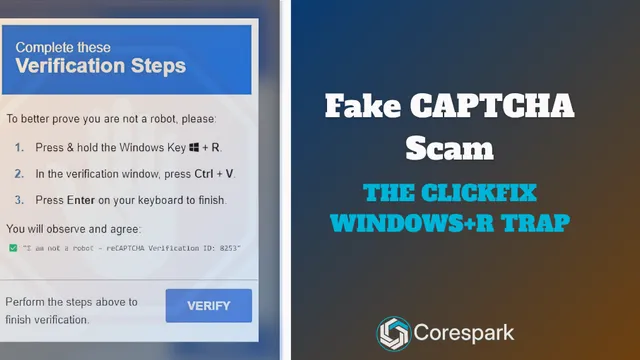
Fake CAPTCHA Scam: The ClickFix Windows+R Trap Explained
Fake CAPTCHA scams may tell you to press Windows+R, paste a command, and run it. Learn the ClickFix warning signs and wh...

Put Your Antique Shop on the Day-Trip Map
Help antique shoppers plan a stop with accurate hours, useful photos, clear categories, directions, and a website that r...